| ||||
 | ||||

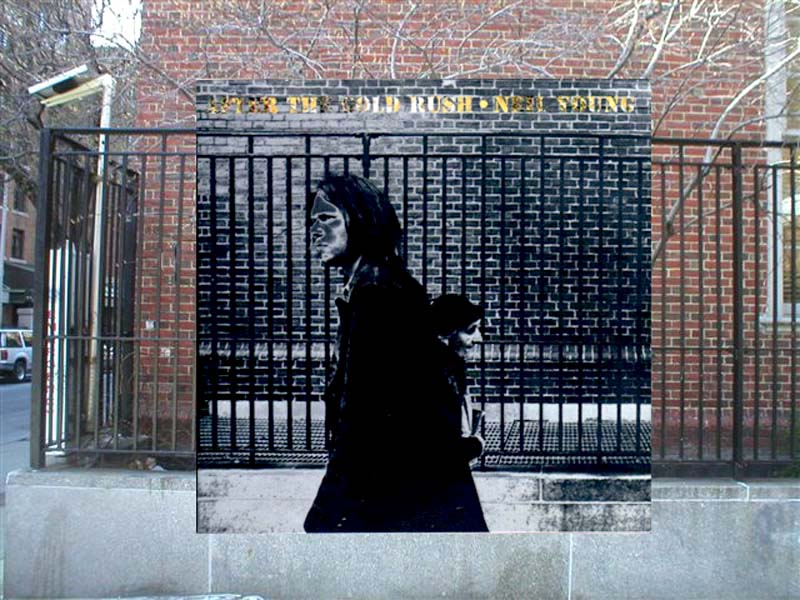
example: Neil Young's 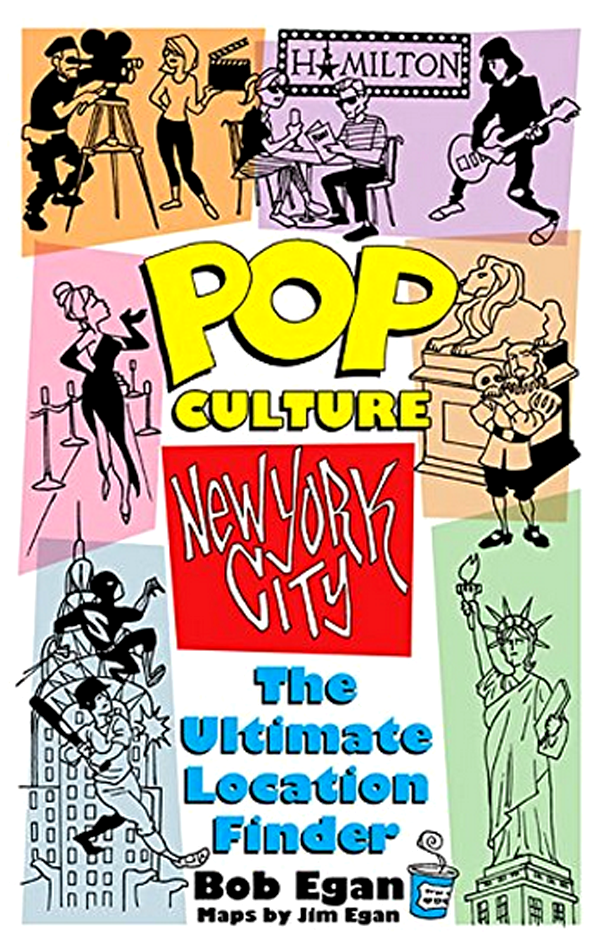
• POP CULTURE - NEW YORK: THE ULTIMATE LOCATION FINDER, based on PopSpots, has maps to over 2,000 Pop Culture locations you can visit in New York City. RELEASED IN 2018! Ask for it it at your at your local bookstore, or buy it online from Amazon, Barnes and Noble, Target, Walmart and other online dealers. Read about it here. To be notified of new PopSpots and "PopSpot Singles" entries, follow PopSpotsNYC on Twitter:
Follow PopSpots on Facebook 
For questions or comments, you can email me, Bob Egan, here. Reference section: 
click here to see ongoing Dylan Research and also selected art, film, and history PopSpots-in-progress. PopSpots in the media. 
Looking for a free and extremely simple online method to learn HOW TO PLAY GUITAR? 
Or, just looking for a list of over 250 easy-to-play 3-chord and 4-chord songs? Click here to get to the website for: Bob Egan's MOST EXCELLENT LIST OF 3-CHORD and 4-CHORD SONGS" For The PopSpots Guide to Bookstores in NYC, click here.
|
The PopSpots Guide to Bob Dylan's Duluth (You can click twice on the photos to fully expand them. Then click the left arrow (back page) to get back.)
Bob Dylan was born and spent his first 6 years in Duluth, Minnesota, a port city on Lake Superior, known as a hub for cargo shipping. Much of the raw iron ore mined in Hibbing came south to Duluth by train to be shipped out to the eastern steel factories via the Great Lakes. As Bob notes in his poem "My Life in a Stolen Moment" (1962): "Duluth's an iron ore shipping town in Minnesota Thought I'd shaken the wonders and phantoms of my youth This map of Minnesota shows Duluth, where Dylan was born, Hibbing, where he grew up, and Minneapolis where he went to college for a year then became a folk singer in the student area called Dinkytown.
The entrance for ore boats to Duluth Harbor is through a huge bridge called the Aerial Lift Bridge, the city's central landmark.
If you visit Duluth you can view the bridge up close at Canal Park.
The iron ore that comes from the Iron Range up by Hibbing is shipped across Lake Superior to the steel mills of Pittsburg and Ohio through huge long, narrow, flat-bottomed (to get through locks and canals) iron boats called "lakers." A "laker" is short for "Great Lakes freighter." One has been turned into a museum near the waterfront. It's called the S.S. William A. Irvin and can be seen below:
(photo by Dennis O'hara) Bob family, the Zimmermans, live high on a hill overlooking the city. The view would have looked much like this.
This picture shows the incline of the hill that takes up much of the town.
(photo source: Shorpy.com) Here it is from the other direction. In Chronicles Volume 1 Dylan writes of the slope: "Most of Duluth was on a slant. Nothing is level there. The town is built on the side of a steep hill, and you're either hiking up or down." He later writes, "There's two seasons: damp and cold."
(photo source: Shorpy.com) The Zimmerman house was at the top of a street like this.
(photo source: Shorpy.com) This is the two-story house near the top of the hill that Bob and his family lived in for Bob's first six years. The address is 519 North 3rd Avenue East. The Zimmermans - Abe and Beatty Zimmerman and their sons Bob and younger brother David - lived on the second floor. Their entrance was the door on the right. They lived there from 1941 to 1947, after which they moved north to Hibbing when Bob was 6 and David was 1. Bob's father had been working for Standard Oil in Duluth as an oil heating system sales and service manager, but then contacted polio, leaving him partially paralyzed in his legs, forcing him to move to Hibbing, join his brothers in their furniture and electronics business, and convalescence (which he did, but which left him with a limp).
A lot of Dylan fans come to Duluth to visit Bob's house, so a local fan club got together to embed a plaque (a coin-like medallion) on the sidewalk leading to the steps to the right door entrance, so visitors would know which door was the Zimmerman's. The plaque looks like a giant coin. It depicts Bob, in profile wearing sunglasses, and with his hair made out of wavy letters reading "Bob Dylan." It also says "In Bob We Trust," "Birth Home 1941-1947," and "2016" the year of the plaque's dedication. The medallion was created by Duluth artist David Everett. Dylan-collector Bill Paget, who owns this home and also the house in Hibbing where Dylan grew up, also has installed a plaque above the front porch reading "First Home of Bob Dylan 1941-1947."
Here's a close look at the entrance to the Zimmerman's second-story apartment. The 5-room apartment took over the whole 2nd floor of the duplex and included: a living room, a dining room, a kitchen, a bedroom, a nursery, and a bathroom, according to Bill Pagel.
The Zimmerman's second floor apartment had a large picture window in the front and a balcony from which one could see Lake Superior at the bottom of the hill.
There was also a small 2nd floor back porch above the alley that ran parallel to the building.
The Zimmermans could see Lake Superior way down at the bottom of the hill. This shot was taken in front of their house looking toward the lake.
Here's an aerial view of the house. An alley runs along the side of the 2-story house.
This was a picture of Bob's parents Beatty and Abe Zimmerman that was possibly taken across the street from their house. (And if not their house, in a very similar neighborhood) They are holding onto the hands of Abe's niece, Toby - the daughter of Abe's brother Jack.
(Thank you, Marie Fotini, for your help with this researching this photo.) This is a colorized version of the photo made with artificial intelligence, so the facial features aren't 100% accurate.
Here's another picture of Bob's parents, Beatty and Abe, taken in 1939 in Duluth..
. . . And a colorized version.
Four generations of the Zimmerman/Stone family - with Bob at age 1. From top to bottom: Beatty (Stone) Zimmerman, Bob's mother; Florence Edelstein Stone, Bob's mother's mother; Lybba Edelstein, Bob's great-grandmother; and young Bob at right.
Bob (bottom right) and his mother Beatty (top right) and friends. Probably age two. 1943.
A colorized version of the above photo.
Baby Bob in 1943 - black & white
Baby Bob in 1943 (age 2) - colorized
Located two blocks west of the Zimmerman's house at 108 East 6th Street, at 1st Street East, you can find the former Nettleton Elementary School where Bob went to kindergarten from fall 1946 to spring 1947. Like many other former Duluth elementary school, the building is presently being converted into apartments, having been sold for $370,000 after it closed in 2012.
(photo: Duluth News Tribune) Here is the view a little to the right. You can see Lake Superior in the distance on your right. This is a similar view that the Zimmermans would have had from their balcony two blocks away.
Down the hill from the Nettleton School was the original St. Mary's Hospital - the hospital where Robert Alan Zimmerman ("Bob") was born on May 24, 1941. This is what is looked like in the 1950's. The address was East 3rd Street between North 4th Ave and North 5th Ave. Over the years the original building (where Bob was born) was demolished and replaced by a larger hospital facility. That hospital facility - that took up a whole city block - was recently demolished and replaced by the current St. Mary's Medical Center, which opened in July, 2023 and is located at 402 E. Second St., a block away from the old hospital.
(photo: Minnesota Digital Library) Here's a postcard of the hospital from the 1950's. By this time they have added a large addition to the left (I don't think that building was up when Bob was born). On the right, you can see the original grayish hospital.
If you want to imagine where the hospital was when Bob was born, go to the corner of East 3rd Street and North 4th Ave East (325 East 3rd Street) and stand in front of the church named St. Mary Star of the Sea and look east. In 2025 that whole block is empty but in this picture I have superimposed the hospital where Bob was born.
Bob's birth certificate. Robert Allen Zimmerman. St. Mary's Hospital, Duluth. "5-24-1961" (May 24th, 1961)
Here's how the local Duluth News-Tribune newspaper announced Bob's birth under "Births - Boys."
The next stop on the Dylan tour of Duluth is a few blocks east. It's the Duluth National Guard Armory, located at 1301-1305 London Road, Duluth. The armory is where 17-year old Bob and his friend Louie Kemp saw Buddy Holly perform on January 31, 1959 - an event that had a major influence on Dylan's music. In his 1998 Grammy acceptance speech, Dylan, who was standing in the front row at the concert ("three feet from him"), recalled that Holly looked at him during the show - an image that "stayed with him forever." As Dylan later told the Grammy audience: "I just wanted to say that one time when I was about 16 or 17 years old I went to see Buddy Holly play - at the Duluth National Guard Armory - and I was three feet away from him and he looked at me and - I just have some kind of feeling - that he was ah, I don't know how or why, but I know he was with us all the time we were making this record in some kind of way." (below) Dylan addressing the Grammy audience:
The concert was part of the "Winter Dance Party" tour featuring Buddy Holly (22), Ritchie Valens (17), J.P. "The Big Bopper" Richardson (28), Dion (20) and the Belmonts, and opening act Frankie Sardo (23), who was having a regional hit in the midwest with his song "Fake Out." Tragically, just two days later, on February 3, 1959, Buddy Holly, Valens, and the Big Bopper were killed in a plane crash after a concert in Clear Lake, Iowa. It was "The day the music died" according to the song "American Pie." The armory, below, was built in 1915 is now part of the Armory Arts & Music Center.
Here's a side view.
And a close-up on the side door. Silhouettes of past performers at the armory have been placed in the windows.
Here's what it looks like packed with kids for a children's concert by the symphony. For the "Winter Dance Party" I don't think they had chairs, to make it easier for the teens to dance. When Dylan went, he was 17, and Louie Kemp was 16, according to Kemp's Book Dylan & Me. Buddy Holly was 22. 2,000 rock and roll fans were at the concert that night. The tickets cost either $1.75 tor $2 for a ticket.
Here's a picture of Buddy Holly and many of the other musicians who played that night. Clockwise from top left: Buddy Holly; Richie Valens; Dion with the Belmonts, and at bottom left - "The Big Bopper," a former DJ and flamboyent entertainer with a top-40 hit then out called "Chantilly Lace." By the time of the concert the original Crickets had disbanded. For this tour Holly was playing with Carl Bunch on drums, Tommy Allsup on guitar, and Waylon Jennings (21) on bass.
(photos by Sharon Johnson, a teenage fan at the concert) This was the poster for the Winter Dance Party in Duluth.
This was the poster for one of the other concerts on that tour. I'm putting it in because it's more legible and songs that each performer was known for are legible.
The Armory is now being refurbished into a music center. This is a screen shot from a YouTube video of the interior of the auditorium. (The video name is below this)
This photo (like the one above) come from a YouTube video called "Louie Kemp talks about Buddy Holly and Bob Dylan." Louie Kemp was one of Dylan's best childhood friends and they attended the Winter Dance Party together in 1959. They watched the concert from right where Louie is standing in the photo. Years later, in 1975, Dylan would call on his old buddy Louie to produce the caravan-like Rolling Thunder Review for him.
This is what the Armory Arts & Music Center is planned to look like. It's actually quite similar to when the Winter Dance Party was there.
BOB DYLAN WAY While in Duluth you might see signs says "Bob Dylan Way." In May 2006 the City of Duluth designated a 1.8 mile pathway through downtown Duluth to honor their native son, Bob. In addition to street signs featuring an image of Bob, three local artist were commissioned to make three manhole covers with images derived from Bob's musical instruments. The three Bob Dylan Way" commemorative manhole covers are pictured below. They are located in the street at at Michigan and Fifth Avenue East; on the sidewalk in front of Fitger's Brewery, and at a corner near the Armory where Bob saw Buddy Holly play.
This is a map of Bob Dylan Way. (click to enlarge)
One of the "Bob Dylan Way" signs.
Fitger's Brewhouse (see the map of Bob Dylan Way above) has one wall devoted to Bob Dylan Way including old photos of Bob's past with Duluth. Figer's address is 600 East Superior Street, Duluth.
(photo by Joel Nordsving) Bayfront Festival Park Bayfront Festival Park, 350 Harbor Drive (near South 5th Avenue West), is where Dylan performed on July 3, 1999, along with Paul Simon (before an audience of 20,000), and also where he performed in 2013 on his Americana Tour, along with Wilco, My Morning Jacket, and Richard Thompson. At the 1999 concert, Dylan famously said, "I was born on that hill over there. Glad to see it's still there."
While you're in Duluth you might look also for a Highway 61 sign (aka U.S. Route 61). Highway 61 goes south through Duluth from Wyoming, Minnesota (its northern end) and then on down 1,400 miles to New Orleans. When you are on London Road outside the Armory, you are on old Highway 61, though you may not see signs for it.
Highway 61 Revisited: The old Highway 61 signs used to look like this.
(photo by Monte Castleman) Highway 61 has been pretty much replaced by Interstate 35 from Duluth down to St. Paul..
(map by Deadpioneer's Historic Minnesota Highways) The last place we are going to visit on our Duluth journey is just 6 miles north of downtown Duluth in a neighboring community called Arnold, part of the City of Rice Lake. It's the Tifereth Israel Cemetery where Bob's parents Beatrice (Beatty) and Abram (Abe) have been paid to rest. The address is 4820 Howard Gnesen Road, Duluth, Minnesota. This is a photo of their headstone. Visitors have placed small rocks on the headstone: a Jewish tradition of respect to show that someone has visited and remembered the deceased.
This front entrance column has the cemetery's name on it. Tifereth means "beauty" or "splendor" in Hebrew.
The Zimmerman headstone is located in the front left of the cemetery.
Temereth Cemetery is about 6 miles north of downtown Duluth.
After leaving the cemetery, if you drive 12 miles west on Route 9 (Martin Road) you'll come to Highway 53. Go north and you're on your way to Hibbing.
The Popspots Map of Bob Dylan's Duluth.
And for those planning to visit Duluth, remember that they have VERY cold winters. The average daily temperature for January is 10 degrees Fahrenheit (-11.1 degrees celsius).
A final postcard.
If you would like to see the webpage for THE POPSPOTS GUIDE TO BOB DYLAN'S HIBBING, click here. 
|
|||