 | |||
 | |||

|
The Coenties Slip "S-Curve," at Coentes Slip and Pearl Street, on the former 2nd and 3rd Ave Elevated Train lines 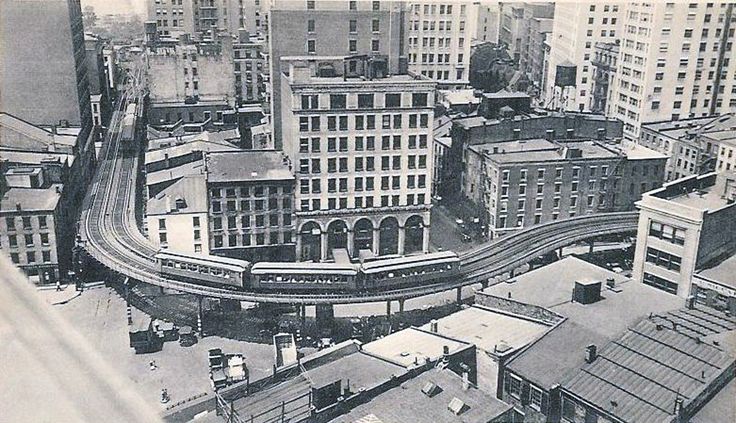
The Coentis Slip "S-Curve" is often seen in documentaries about the early days of the elevated subway lines in Manhattan. The quick S-turn executed extremely close to a group of buildings, followed by the train seeiming to disappear into lower Manhattan's canyons around a bend, make it a particularly effective piece of New York visual history. One place the scene was recently popularized was in a video for the song "New York I Love You But You're Bringing Me Down," by the group LCD Sound System. The clip was edited by Thomas Cazales using part of a film made in the 1940's by Carson Davidson entitled Third Avenue. You can see the clip beginning at the 1:00 minute mark, by clicking here: (New York I Love You. . .clip) I will put this link at the end of the entry also in case you want to read through the entry first. About Coenties Slip ( From UNTAPPED CITIES) : An in-depth look at the S-curve from a 1935 Bromley map of New York City:
Here is where it turns into Pearl Street. Notice how close it is to the buildings. 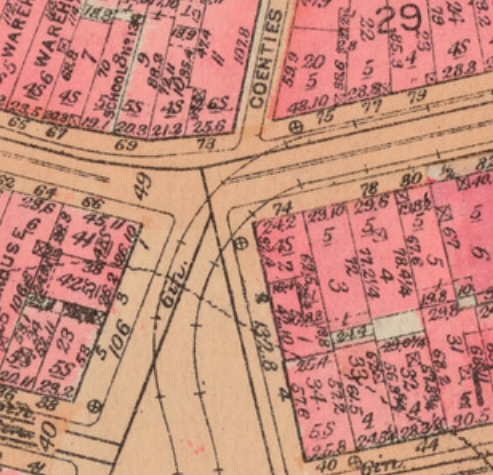
Here's a famous picture of that curve taken by Andreas Feininger around 1940. (The 2nd Avenue El was taken down in 1942. The 3rd Avenue El, which also used this piece of track was taken down in the 1950's.) 
Here is that same location, but in color, from an old documentary. The dark area on the lower left is a train going behind the corner of the building. 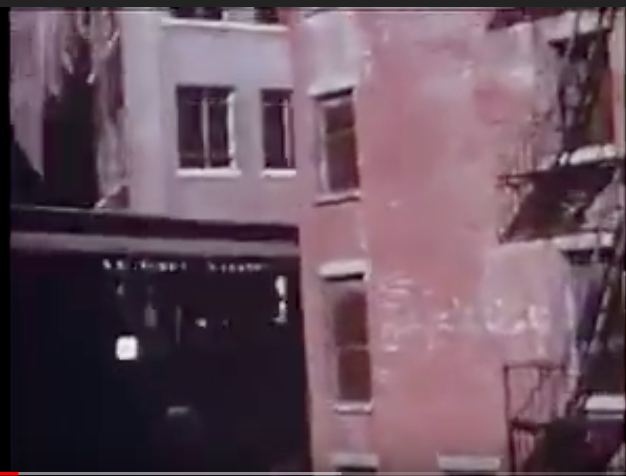
And here's that same spot (circled) today. (The building address is 2 Coenties Slip, aka 74 Pearl Street.) 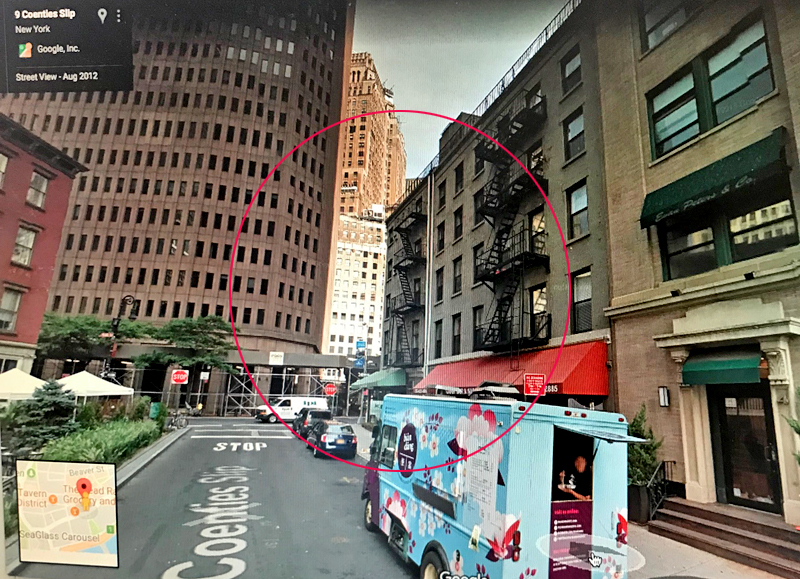
The old meets the new. 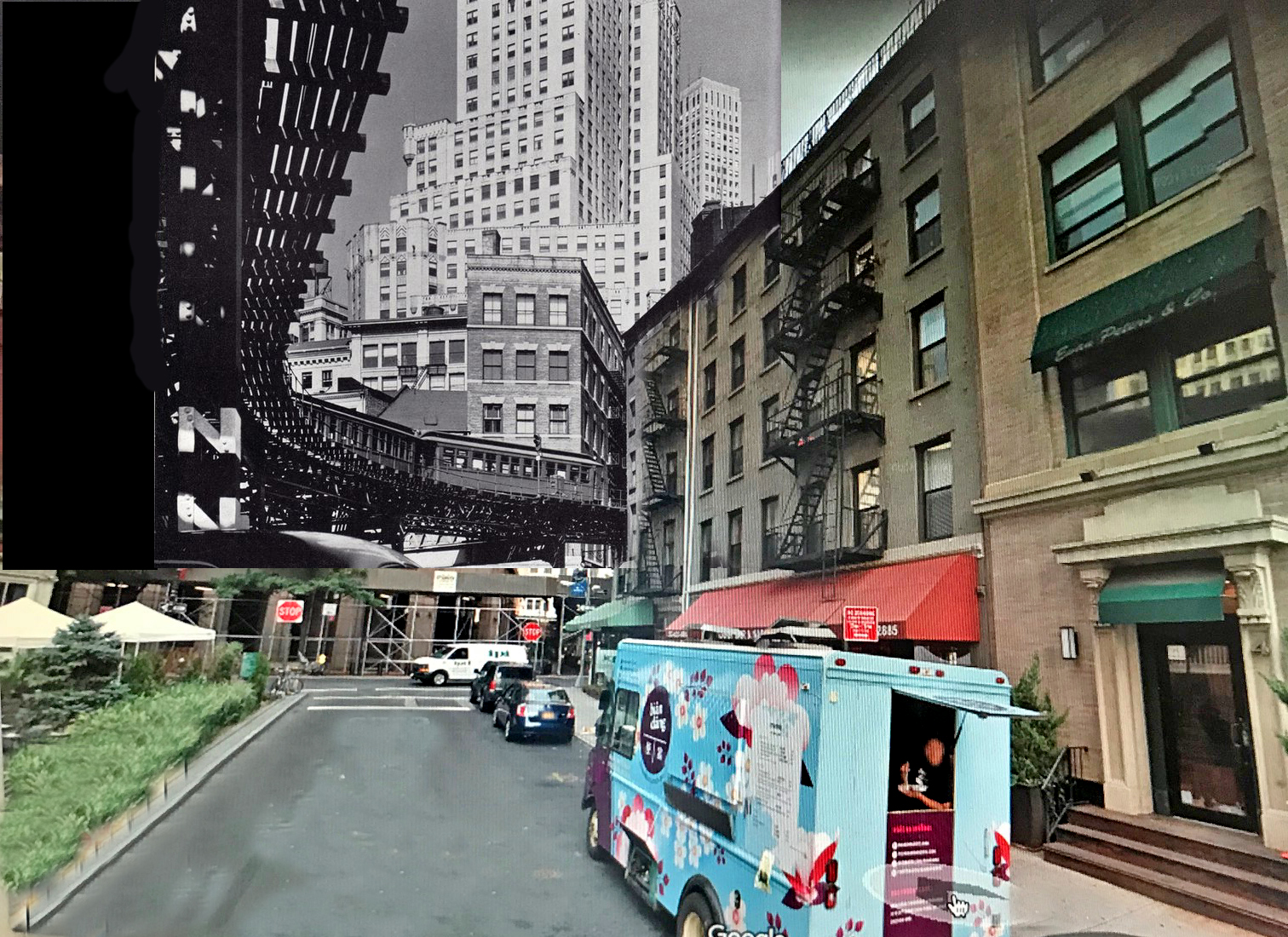
Here are a variety of other pictures of the celebrated S-curve at Coenties Slip. #1 ( This is by Andreas Feininger) Looking north. 
Coenties Slip #2. Looking north. 
Coenties Slip #3 Looking north. 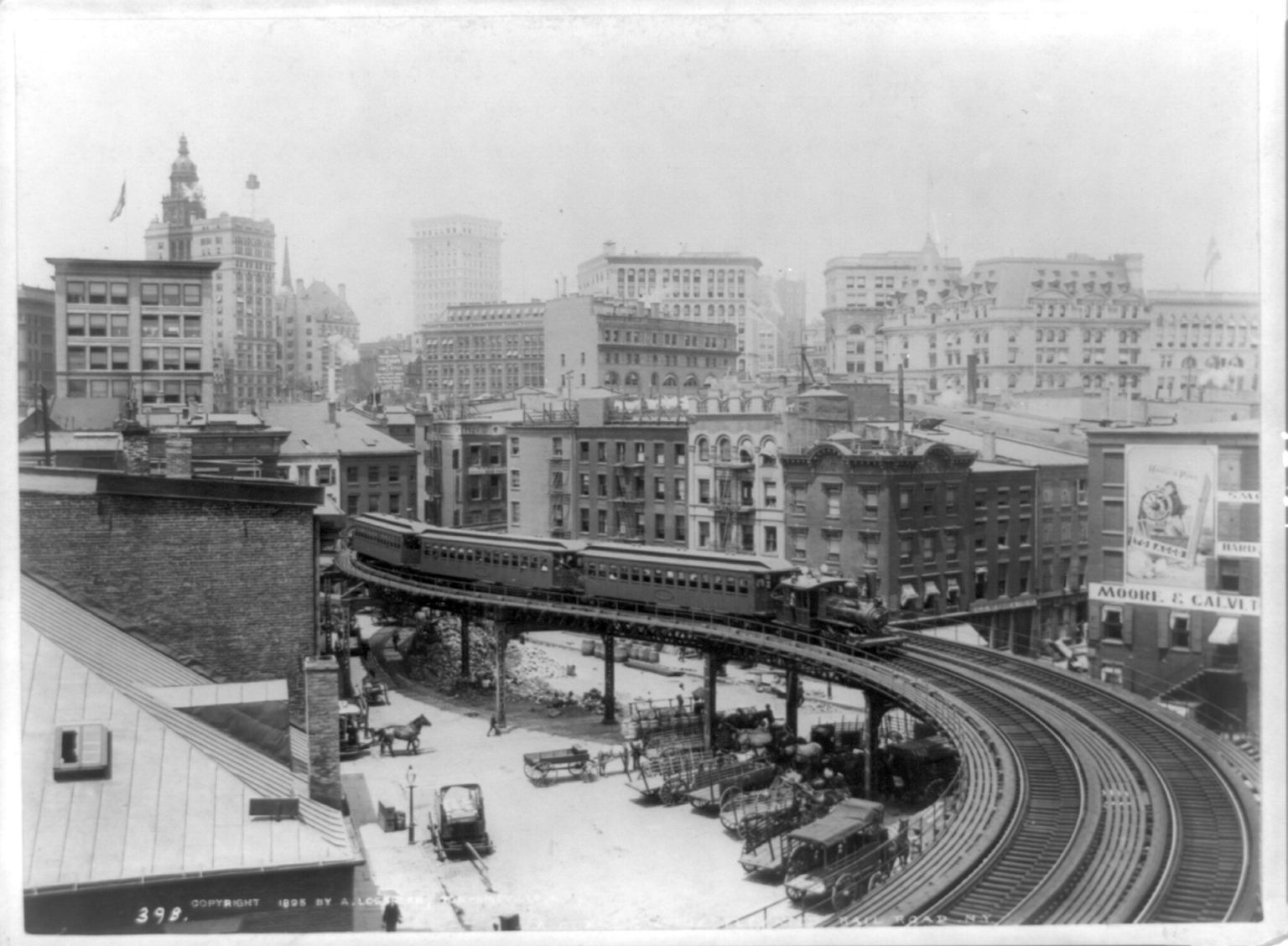
Coenties Slip #4 - from 1904. Looking north. 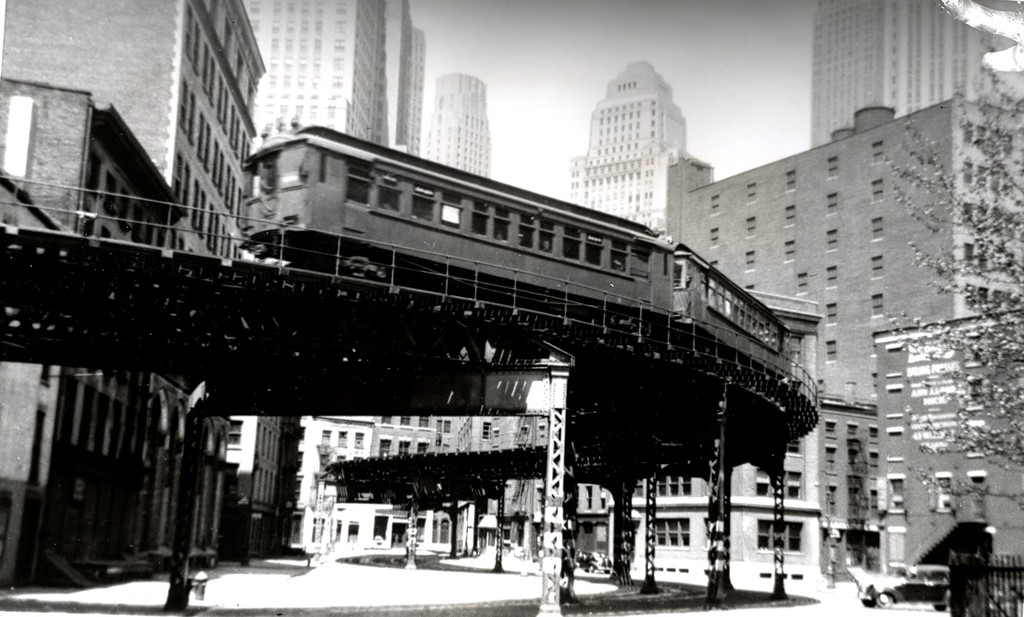
Coenties Slip #5. The building with the sculpted bears has been replaced. Looking north 
Coenties Slip #6. Looking east toward the river. 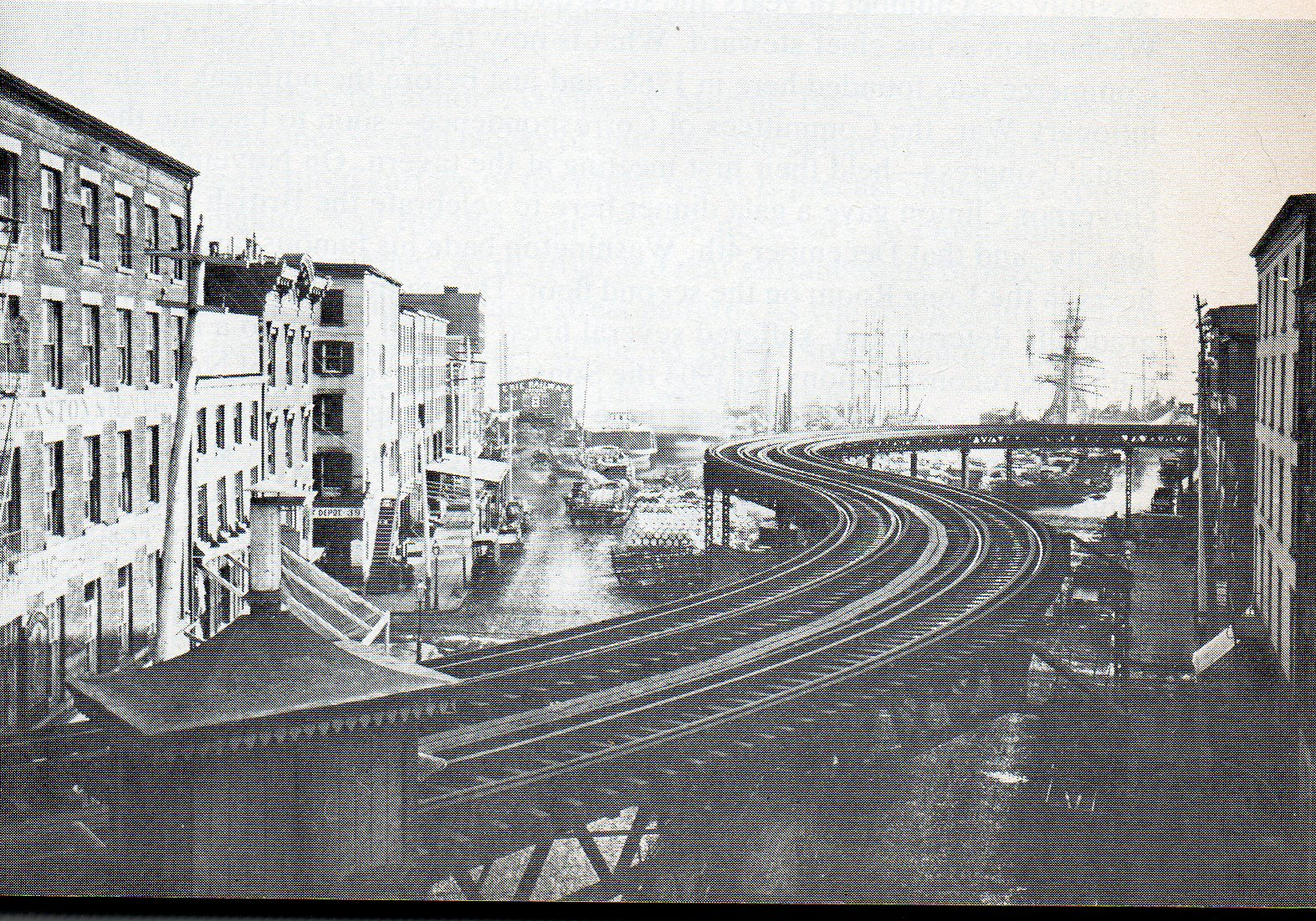
Coenties Slip #7 Looking southeast toward the East River. 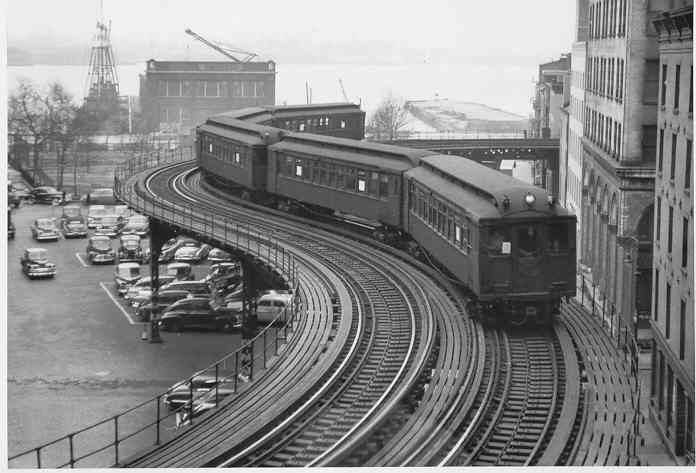
Here, in a sequence of four shots, is the train disappearing around the corner from Coentires Slip as it enters Pearl Street from a 1940's short film. 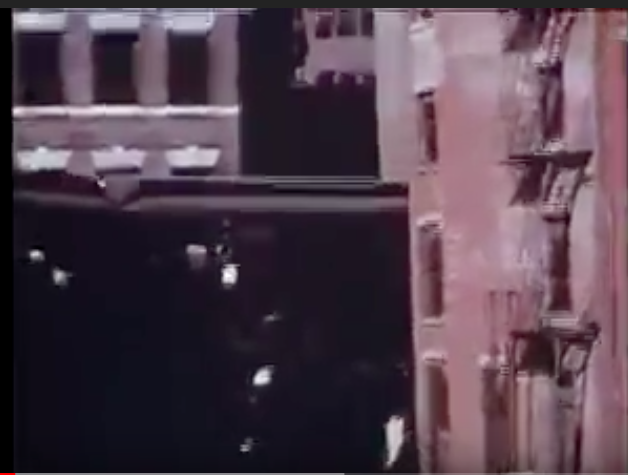
From the video. Shot #2
From the video. Shot #3. 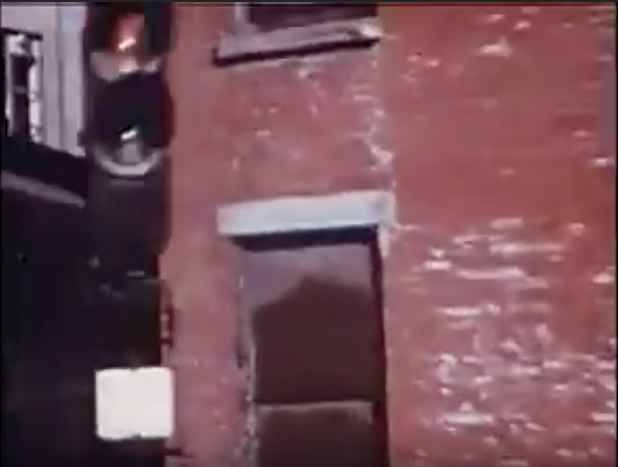
From the video #4. Shot #4. 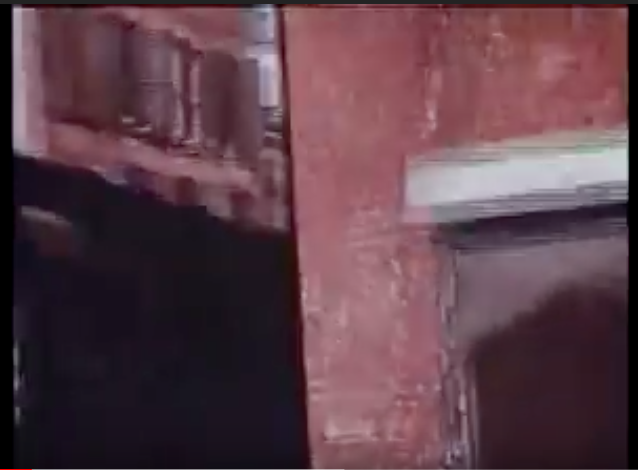
Both the 2nd Avenue EL and the Third Avenue El used this stretch of tracks. The train split a little further north at Chatham Square next to Chinatown. The Coenties Slip "S-curve" is circled in this photo. The trains started by South Ferry at the bottom tip of the island. 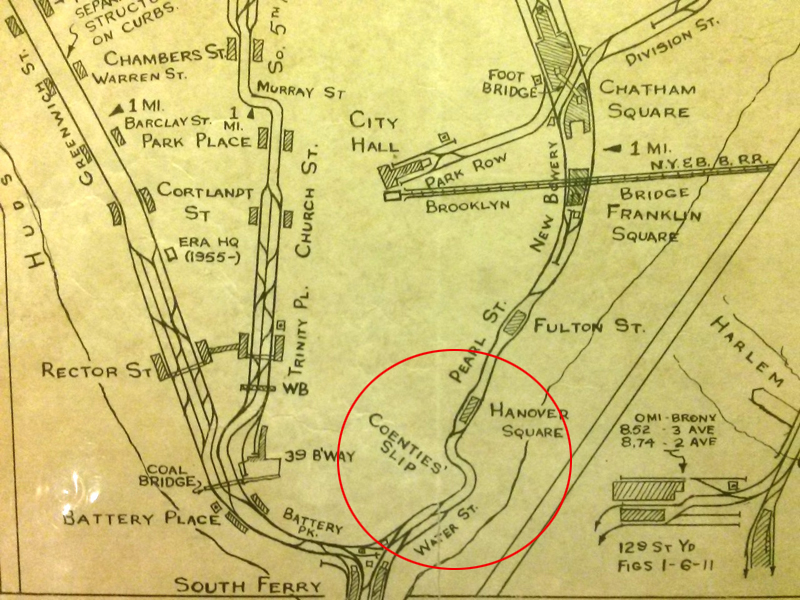
A map of that same area today. 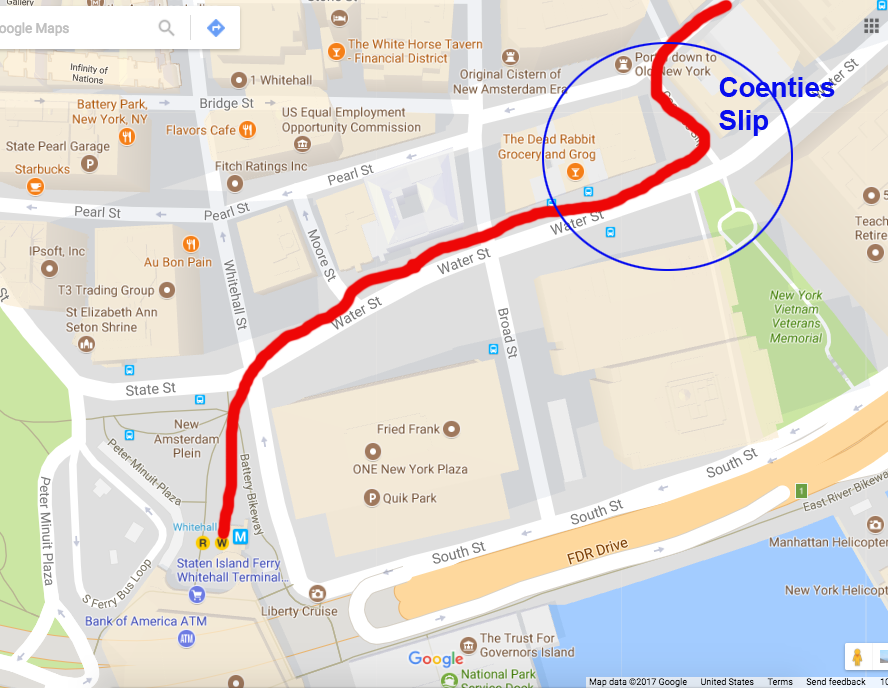
And here's another modern look at the S-curve from above. 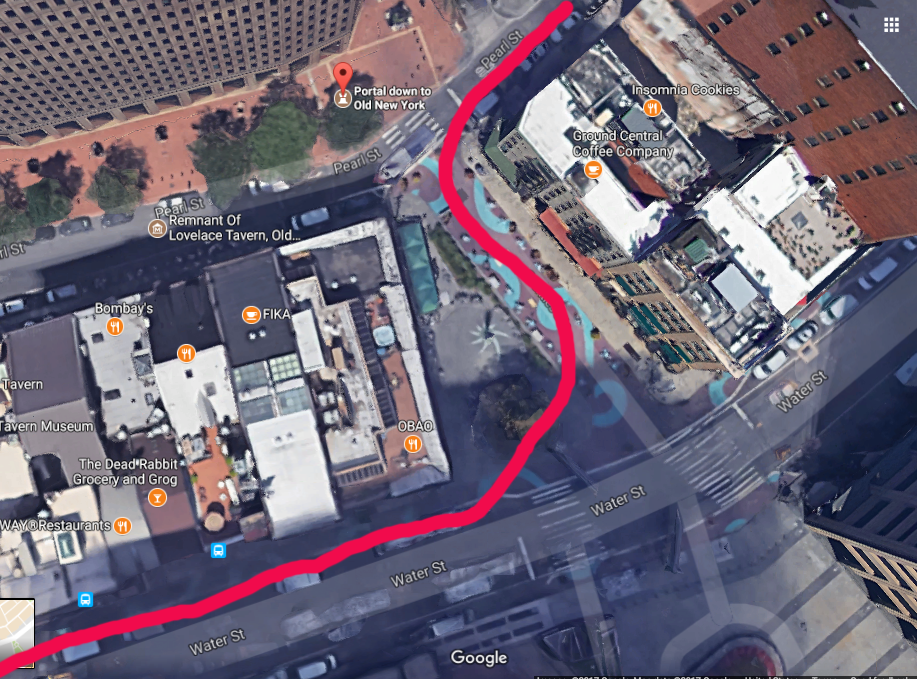
Here's the corner building as seen from the street. It looks like the building was constructed with a cut-off corner to make it easier for the train tracks to get around it. (Coenties Slip at Pearl St). 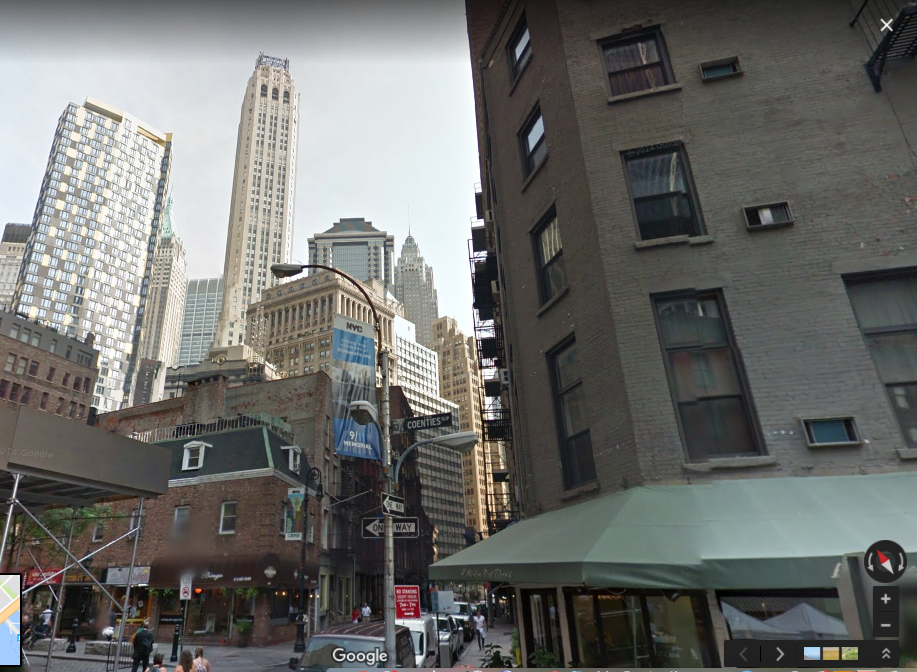
Here, again, is the link to the song video that features the "S-curve": You can see the clip, beginning at the 1:00 minute mark, by clicking here: (New York I Love You, But You're Bringing Me Down by LCD Sound System) 
|
||

